
What to Fix First: Technical SEO, Content, or AI Visibility? (The Founder's Triage Framework)
How do you prioritize SEO fixes? To maximize ROI, SEO prioritization should follow a Hierarchy of Needs:
- Access: Fixing technical blockers that prevent search engines from crawling the site.
- Relevance: Aligning content architecture with user intent to capture traffic.
- Authority: Optimizing for AI visibility and external citations to build trust. Attempting to build Authority before fixing Access is the most common cause of failed SEO campaigns.
Most SEO roadmaps fail because they are too long. When a founder receives a 50-page audit filled with “red errors” from an automated tool, the natural reaction is paralysis. Do you fix the meta descriptions? Do you write more blogs? Or do you try to figure out why Perplexity isn’t mentioning your brand?
In 2026, you cannot do everything. You must triage. To move the needle on revenue and brand equity, you need a framework that prioritizes leverage over activity.
Here is how to decide where to allocate your capital and dev resources first.
The Myth of the "Perfect Health Score"
SEO software (like Semrush or Ahrefs) is excellent at finding technical minutiae. However, these tools cannot distinguish between a “broken link” in your footer and a structural flaw that is costing you $10,000 a month in lost pipeline.
The 80/20 Reality: On average, 50-70% of pages on mid-size sites receive no organic traffic, often due to poor content alignment rather than technical errors. Zooming out, it’s actually much worse than that. Some studies have shown that over 90% of pages get no traffic from Google at all.
Prioritization is an act of business judgment, not a software output. As a founder, you don’t need a cleaner site; you need a more visible business.
- The Founder's Guide to Modern SEO & AI Visibility
- Who to Hire? SEO Consultant vs. Agency vs. In-House
- 10 Questions to Ask Before Hiring an SEO Consultant
- How Much Does an SEO Consultant Cost in 2026?
- How to Measure the ROI of SEO Beyond Keywords & Traffic
- What to Fix First: A Founder's Visibility Triage Framework
- Modern SEO Consulting in the Age of AI
- What a Strong SEO Roadmap Looks Like (First 90 Days)
The Hierarchy of Search Needs (The Triage Model)
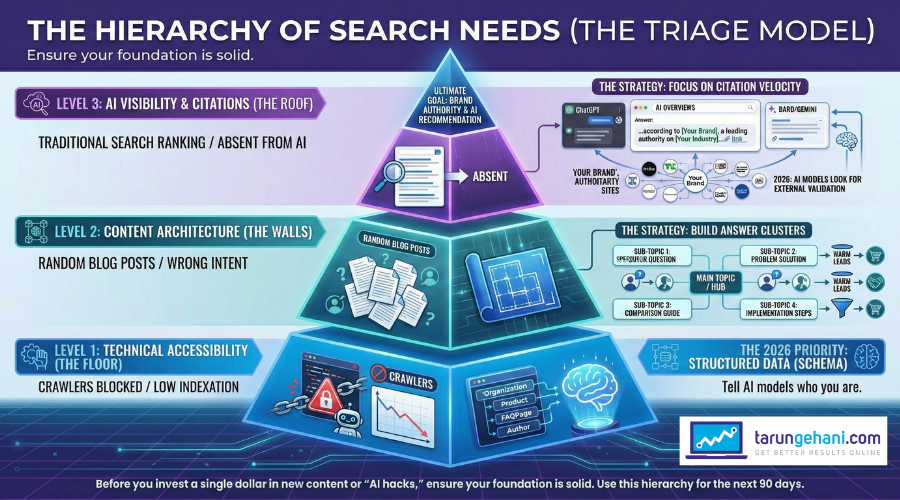
Before you invest a single dollar in new content, you must ensure your foundation is solid. Use this hierarchy to guide your next 90 days:
Level 1: Technical Accessibility (The Floor)
If a search engine or an AI crawler cannot efficiently “read” your site, you are invisible.
Fix first if: Your indexation rate is low, or your site uses complex JavaScript that masks your content from LLM crawlers.
The Strategy: Structured Data (Schema). This is no longer just for “star ratings” in Google. It is the primary way you tell AI models exactly who you are, what you sell, and why you are an authority.
Level 2: Content Architecture (The Walls)
Once the machines can read your site, you need to give them something worth citing.
Fix first if: You have traffic but no warm leads. This usually means your content is targeting the wrong intent or lacks a clear Topic Architecture.
The Strategy: Stop writing random blog posts. Build Answer Clusters that solve the specific questions your buyers ask during the sales process.
Level 3: AI Visibility & Citations (The Roof)
This is where you move beyond Google’s blue links and into the AI Answer Engines.
Fix first if: You rank well in traditional search but are absent from AI Overviews (AIO) or ChatGPT citations.
The Strategy: Focus on Citation Velocity. In 2026, AI models look for external validation. You need your brand mentioned on the authoritative third-party sites that these models use as training data.
(For a deep dive on this layer, read our guide on Modern SEO Consulting in the Age of AI.)
The Founder’s Decision Tree
How should you allocate your internal team’s time this month?
Follow this logic:
Is your core “Money Page” appearing for your brand name search?
No? Stop everything. Fix Technical Indexability.
Is your traffic growing but your pipeline is flat?
Yes? Stop writing “top of funnel” guides. Fix Content Alignment and Conversion Intent.
Are your customers saying, “I asked a chatbot for a recommendation and it didn’t mention you”?
Yes? Shift resources to AI Visibility and Entity Mapping.
The Opportunity Cost of Slow Execution
In the AI era, the first-mover advantage is being reclaimed. Search engines and LLMs are currently building their Knowledge Graphs of who the leaders are in every niche.
According to McKinsey, 50% of buying research now starts in an AI interface. If you aren’t there, you aren’t in the deal.
If you spend six months fixing minor CSS errors while your competitor is building the authoritative clusters that AI models crave, you are losing more than just rankings, you are losing your place in the future of discovery.
Focus on Leverage, Not Checklists
A good SEO consultant doesn’t give you a longer to-do list; they give you a shorter one. They help you identify the 20% of actions that will yield 80% of your business results.
Tired of the 50-page audit that never gets implemented?
Get a Prioritized Roadmap that tells your team exactly what to fix in the next 90 days to maximize your visibility.
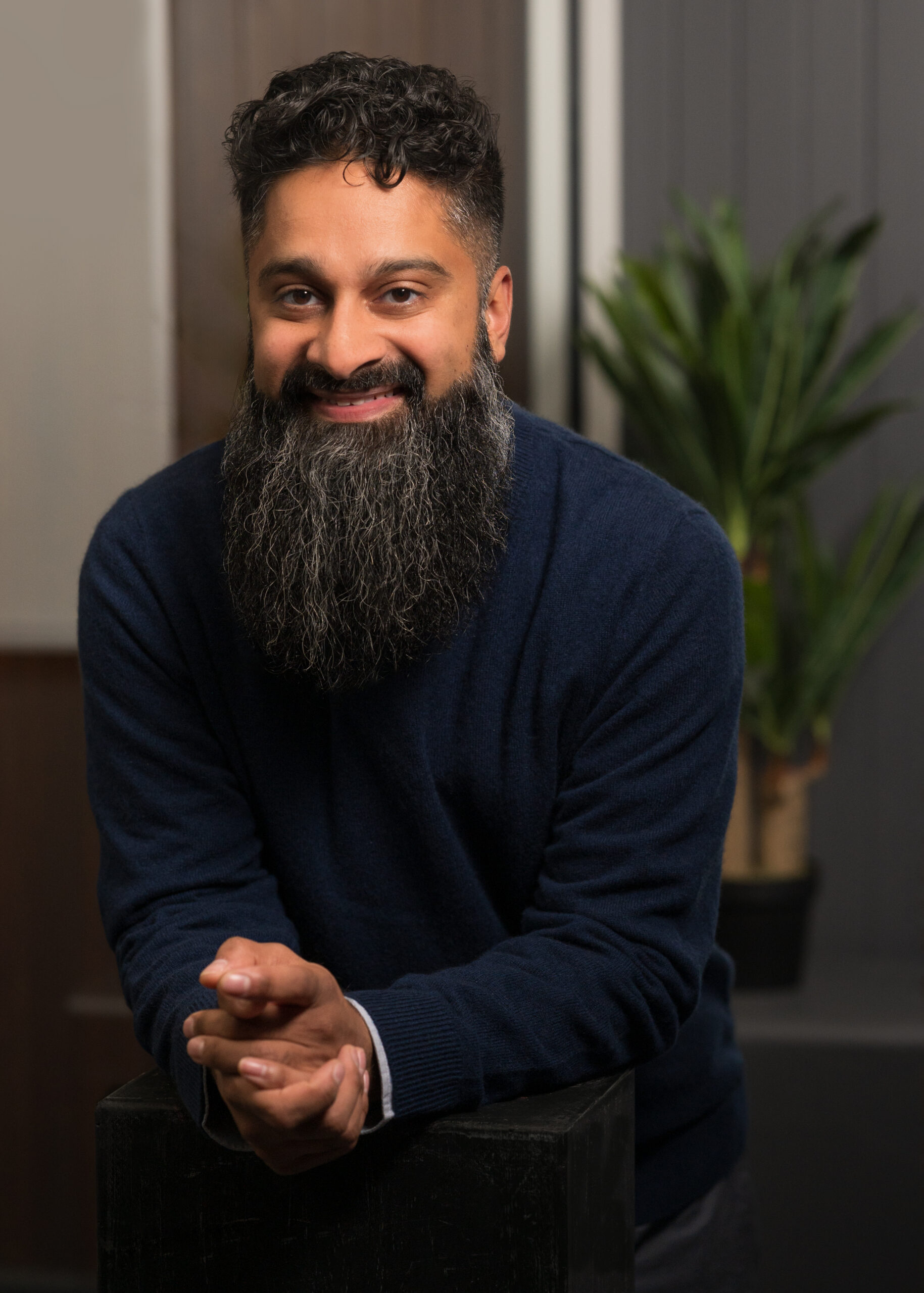
Tarun Gehani, Founder & Principal Consultant
Hey, I’m Tarun.
With over 15 years of experience in digital marketing strategy, I help founders and marketing leaders navigate the transition from traditional SEO to AI-driven visibility. My approach is built on a simple premise: Revenue over rankings. Results over reports.
I don’t sell hype. I provide decision-making frameworks that de-risk your marketing capital and build durable assets.
Ready for Sustainable Growth from Your SEO Investment?
You don’t need another checklist. You need a roadmap.
Let’s establish your baseline and build a path to better results online.