

TL;DR:
I spent September 15-16, 2026 at brightonSEO San Diego and attended 29 talks. Three main themes that were a common thread:
- Most AI engines can’t render JavaScript, so plenty of websites are invisible to them.
- Your own content is only a small minority of what AI engines cite. Earned media carries the weight.
- AI did not replace search. It moved into the middle of the buying journey.
The surprise for me, 17 years into this industry: the conference’s most famous talk title declared technical SEO dead*, and the most technical talks were the ones that actually taught me the most. And that layer is exactly where “AI visibility” is decided.
Two hats and one question
Similarweb put two hats on my head at brightonSEO San Diego.
One says SEO Expert. The other says AI Search Specialist.
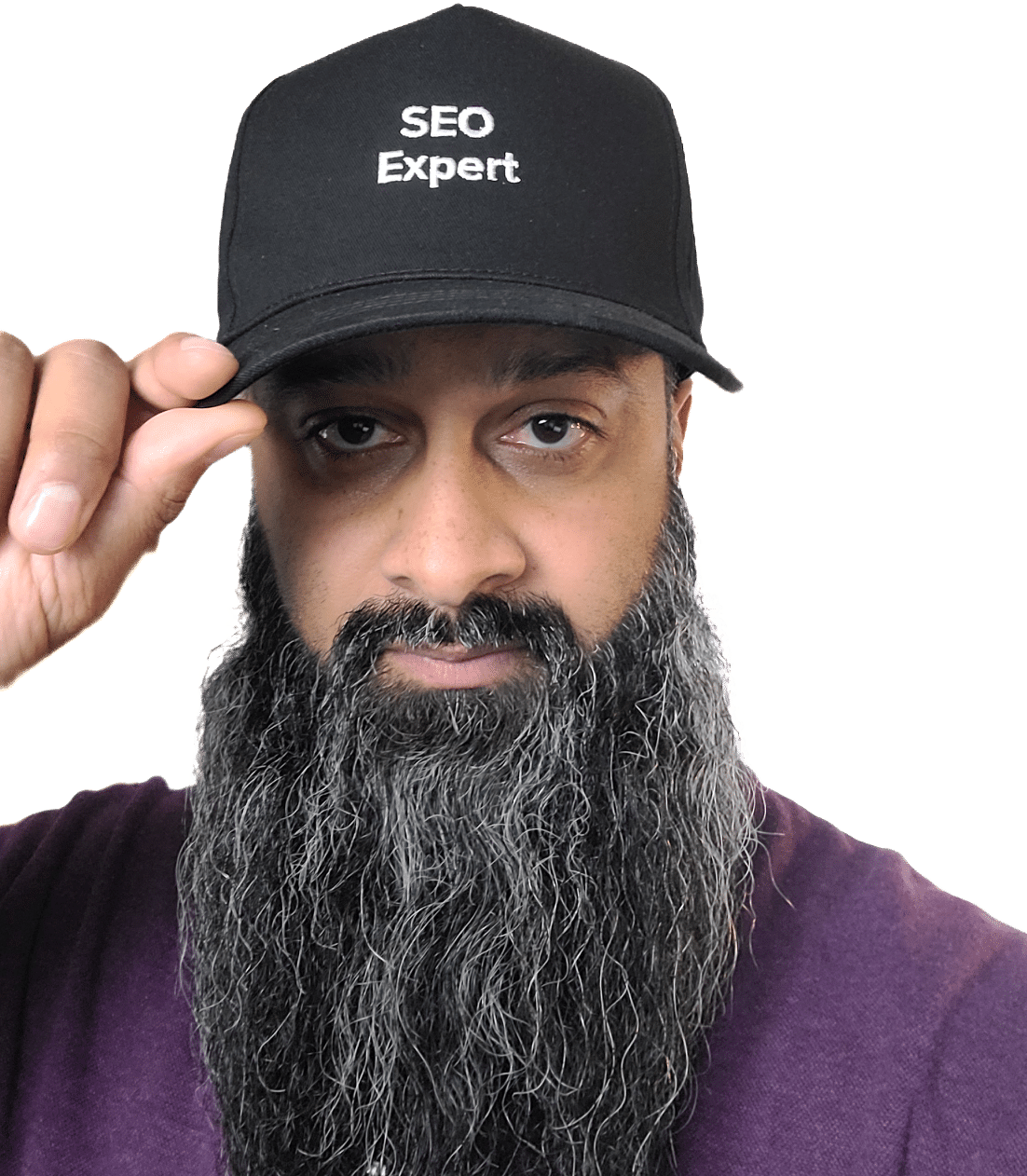
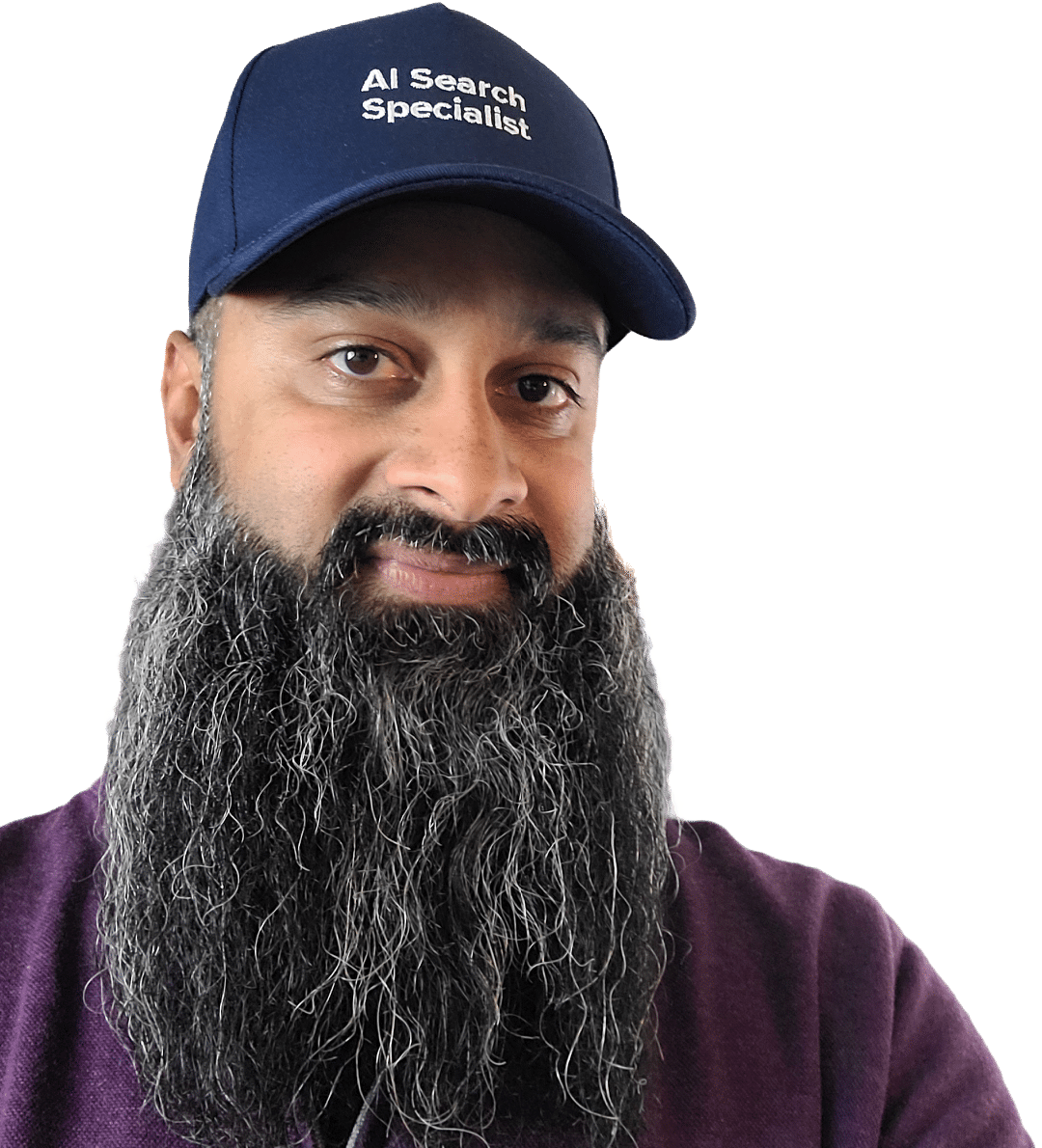
I’ve spent 17 years earning the first one and the last four years earning the second. The whole conference turned into a two-day discussion about whether those are still two different hats. It is the same question every founder and marketing leader asks me in their own words:
Do we need an SEO strategy or an AI search strategy, and are those separate budgets now?
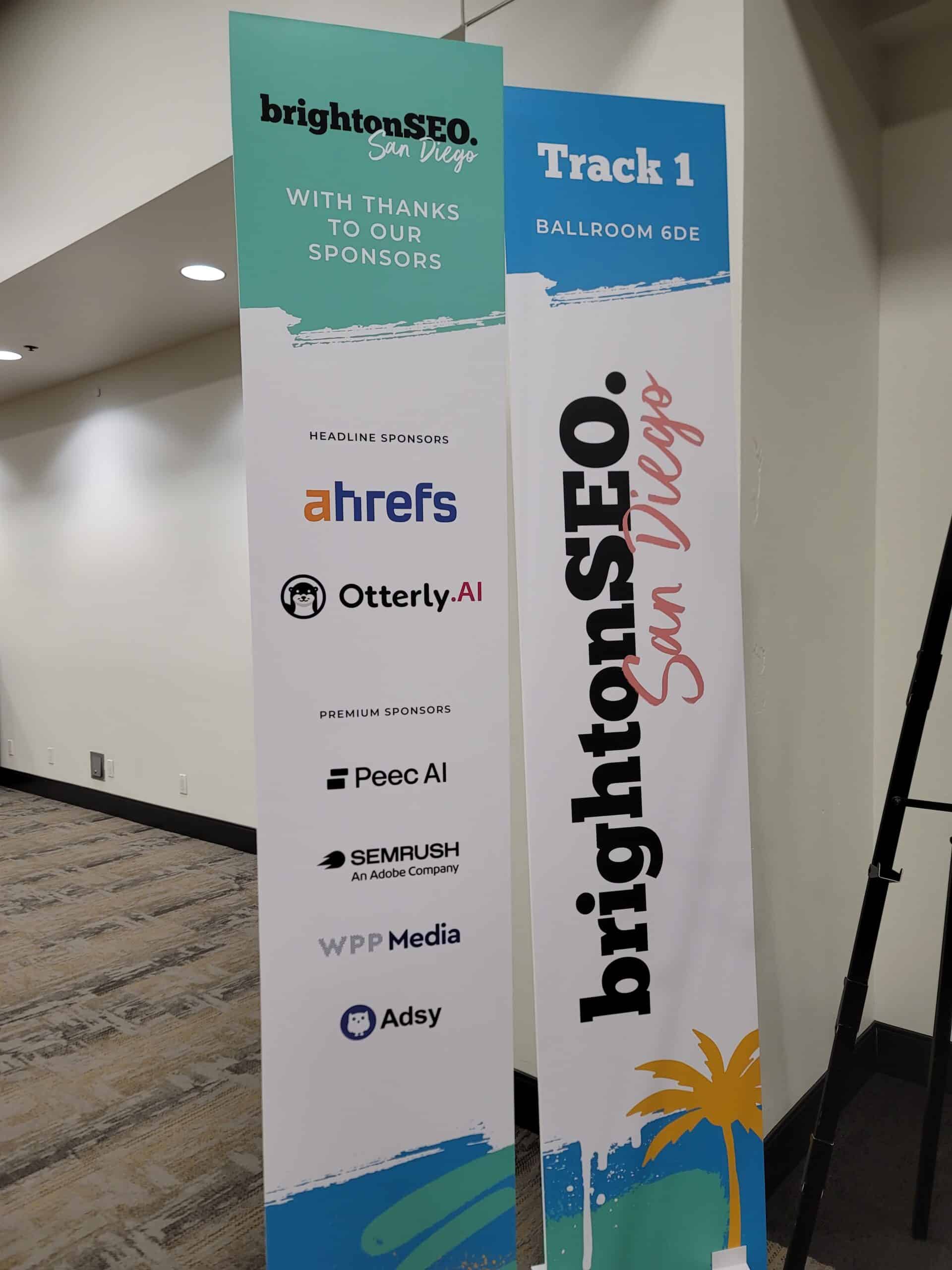
The setting for that discussion (sunny San Diego with a low of 67 and a high of 77 every single day I was there) takes the work seriously and itself… less so. A life-size Otter greeting me at the entrance of the San Diego Convention Center, free drink tickets circulating like currency. It was exactly the energy the week deserved.
Between the conference swag and the tacos, I met people I’ve followed for years, made new friends, and got a ride to the after party in a car full of marketers. I also walked out with a verdict on the week’s most quoted talk title: technical SEO is not dead.
It moved down a layer, into rendering, response codes, and log files.
This is my field report: the ride, the numbers, and the evidence for that verdict.
Day 1
Meeting the People Behind the Bylines
You follow certain people’s work for over a decade and then they are just standing there, wearing a badge like everyone else.
Day 1 was that experience on repeat. I finally met three of the many people I look up to in this industry:
- Ross Hudgens of Siege Media, whose talk laid out GEO tactics you can run today, backed by vertical-by-vertical citation data.
- Sam Torres of Pipedrive, whose JavaScript SEO session ended up being one of my biggest takeaways of the conference.
- Patrick Stox (formerly of Ahrefs), who walked on stage under the most quoted talk title of the week: Technical SEO is dead*.
*He put an asterisk on it. Hold that thought. I’ll come back to it, because while I disagree with the headline, I do agree with the asterisk, and the difference is the whole story.
Midway through the day I stepped out to Agave at the Marriott for tacos and a hazy IPA. If you attend a conference within walking distance of good tacos and do not use that advantage, I cannot help you.
Theme 1
AI Can't See Most of Your Website
Four different speakers, from four different companies, walked on stage with the same core finding:
AI crawlers can’t execute JavaScript like Google can, and that gap decides who shows up in AI answers.
Sam Torres put a number on it, citing a 2024 study: 69% of AI crawlers cannot execute JavaScript. If your content renders client-side, the assistant asking questions on your buyer’s behalf may be reading a nearly empty page.
The direction is backed by independent, large-scale data. According to Vercel and MERJ’s crawler study,
None of the major AI crawlers (GPTBot, ClaudeBot, and PerplexityBot among them) render JavaScript at all.
Hannah Pelletier of Prerender showed the same problem from the rendering layer, including a case study on what serving pre-rendered HTML does for crawler access. The fix is unglamorous, which is part of why so few teams have made it. Her proof point: On, the running shoe brand, has prerendered since 2023. When they switched it off in one smaller market as a test, traffic dropped 90% and came back within weeks of turning it on again.
Serge Bezborodov of JetOctopus and EdgeComet live-tested AI bot myths against real server logs, and his running theme stuck with me: stop repeating what bots supposedly do, and go look at what your own logs say they actually did.
Matt Thompson of Scrunch asked the question that could headline the whole era:
“If AI can’t read your site, does it even exist?”
Matt Thompson, Scrunch
This one is personal for me. I am mid-migration with a client right now, working alongside Ruchi Soparkar of Kachi AI on exactly this: reading server log files to see how AI bots interact on the site. Watching four talks confirm the approach we are already running was one of the more satisfying moments of the week.
Kachi.ai is an AI search analytics platform that reads a site’s server logs to show which AI bots visit which pages, then connects that activity to real sessions, conversions, and revenue in GA4.
That’s a different starting point from most AI visibility tools, which estimate from sample prompts rather than measuring what AI systems actually do on your site.
Actionable Takeaway: You don’t need to be technical to check your exposure. Ask whoever runs your site one question: “Show me our raw HTML next to the rendered page. Is the content in both?” If the answer only exists after JavaScript runs, AI engines likely can’t see it. If you want to check it yourself, Grace Frohlich of Amsive has a revenue-weighted audit approach that covers how, and Sam Torres covers the details in her Sitebulb JavaScript audit guide.
The exhibitor hall
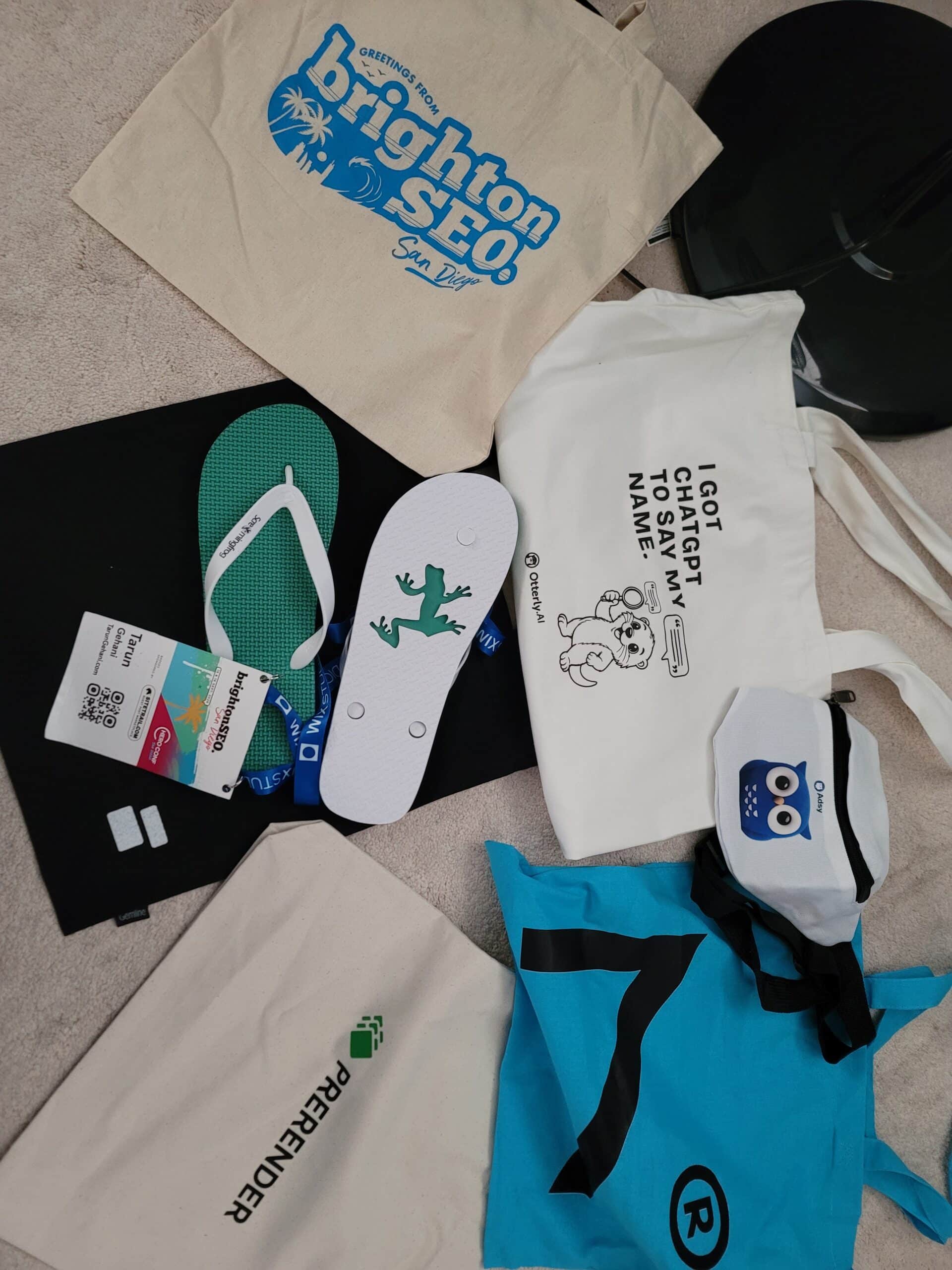
Day 1 continued with a lap of the vendor booths. The swag award goes to Screaming Frog, who handed out flip-flops (what!?). I’ve collected more stickers, t-shirts, and canvas bags than I can count, but conference flip-flops were a first, and in San Diego they were also practical.
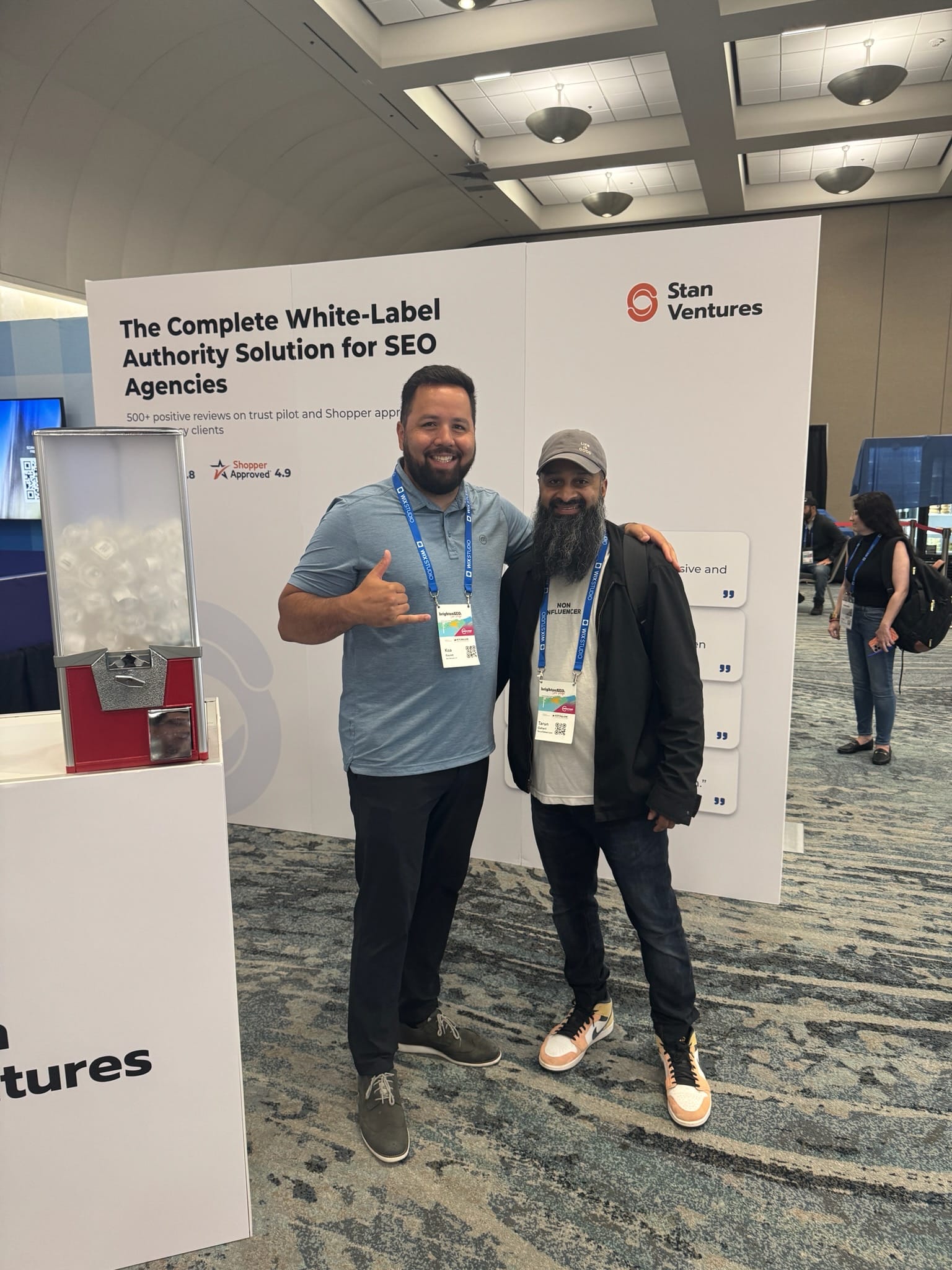
I also finally met Koa Kauwe of Stan Ventures and Ranmay Rath of Digital Web Solutions in person. Both had interviewed me on their podcasts about SEO & AI. Shaking hands with someone after you have already spent an hour in conversation with them is one of the stranger and better parts of modern professional life.
If you’re interested in checking out the episodes:
The better haul was the demos. Walking through new and emerging features with the people who sell these tools is a fast way to see where the industry is headed before the announcements land in my inbox. Add in conversations with John Leahan at the Semrush booth and Amanda Wright about what SpyFu and RivalFlow are building, and the exhibitor hall earned its keep.
It also made one thing obvious: the AI visibility tool market is crowded. Booth after booth offered prompt tracking, share of voice, and share of platform dashboards, with a lot of overlap between them. If you are a business owner or marketing leader, it is hard to tell which tool is better, or even how you would judge that. More on how to judge those tools under Theme 3.
Theme 2
Your Own Content is a "Minority Shareholder" in Your AI Visibility
Two independent datasets, same conclusion.
Beth Nunnington of Journey Further, drawing on analysis of 4,510 pieces of coverage: 9 out of 10 LLM citations come from earned media, not your own content. Her framing stuck with me. Your brand is no longer what you say it is. It is what the algorithm thinks it is, assembled from everything already written and said about you.
The team at Searchable, presenting an analysis of over a billion sources, put your own content at roughly 2.9% of AI citations, with competitors collectively taking around 31%. Chris Donnelly was slated to give that talk and could not make it, so Ivan Slobodin stepped in and delivered it. Their data also showed that two out of three pages in Google’s top results are never read by ChatGPT. Ranking and being cited are different games.
“Your brand is no longer what you say it is. It is what the algorithm thinks it is.”
Beth Nunnington, Journey Further
Christian Ward, Chief Data Officer at Yext, added the unsettling layer from a 38 million data point study: the major AI models agree with each other only 4% of the time. There is no single answer engine to optimize for. There are several, each with its own personality and index, a pattern Yext’s published citation research shows structurally: different models consistently prefer fundamentally different source types.
Ross Hudgens rounded out the theme with a practical push toward YouTube and affiliate placements as citation levers, places your category’s citations already live, whether or not you are there.
Actionable Takeaway: Find the publications AI engines already cite in your category and earn your way into them. Ross Hudgens put a number on it: in most categories there aren’t hundreds of sites with real AI citation volume, there are 10 to 20. Find yours. If PR and SEO are separate line items in your budget, that split is now costing you visibility: earned media has become visibility infrastructure, not a brand “nice-to-have.”
How a missing drink ticket turned into a car full of marketers
Here’s the part of a conference that never makes the agenda.
Day 1 ended with a happy hour at the convention center, and in line I introduced myself to Jessica Cole, who runs marketing for small businesses as their outsourced marketing department.
My opener was not a pitch. It was: where did you get your drink ticket?
The answer: tucked inside the little newspapers the brightonSEO team handed out. I didn’t have one. Then we spotted a whole pile of newspapers on a table a few feet away, and I grabbed them feeling like I had won the conference. Handed a couple to Jessica, a couple to another attendee in line. We opened them up.

Every single drink ticket had already been torn out. Someone had harvested the entire stack and left the newspapers behind like empty shells. Elation to disappointment in about ten seconds.
I told them I’d figure it out. Worst case, I would just explain it to the bartender. When we got to the front, the bartender’s answer was that they were also selling drinks, which is bartender speak for “no.” And before I could negotiate any further, the attendee I had handed newspapers to passed me one of her own tickets. She had spares the whole time. Jessica and I were still laughing about it when the drinks arrived.
That broke the ice better than any icebreaker could. I called Ruchi to come join us, the huddle grew, and at one point it included Ken Marshall, whose talk earlier that day on verbal identity really hit home (more on that in the “Rapid round” below), and who clearly practices the relationship half of his own material.
Eventually the event staff politely reminded us they had a conference to rebuild for the morning, and we needed to keep it moving. So, we did.
Jessica offered a group of us a ride to the official after party. In that car: Ruchi, Kiani Williams, another marketer whose name I am still kicking myself for not writing down, and me. Ten minutes of car conversation did more for those relationships than a hundred connection requests would.
When we got to the after party, Jessica, Ruchi, and I had talked through everything from client work to how each of us ended up in this industry. It was also a rare chance to spend time with Ruchi outside of a client call, which made the whole night better (or maybe it was the fact that everyone around us, for some reason, kept giving me their free drink tickets).
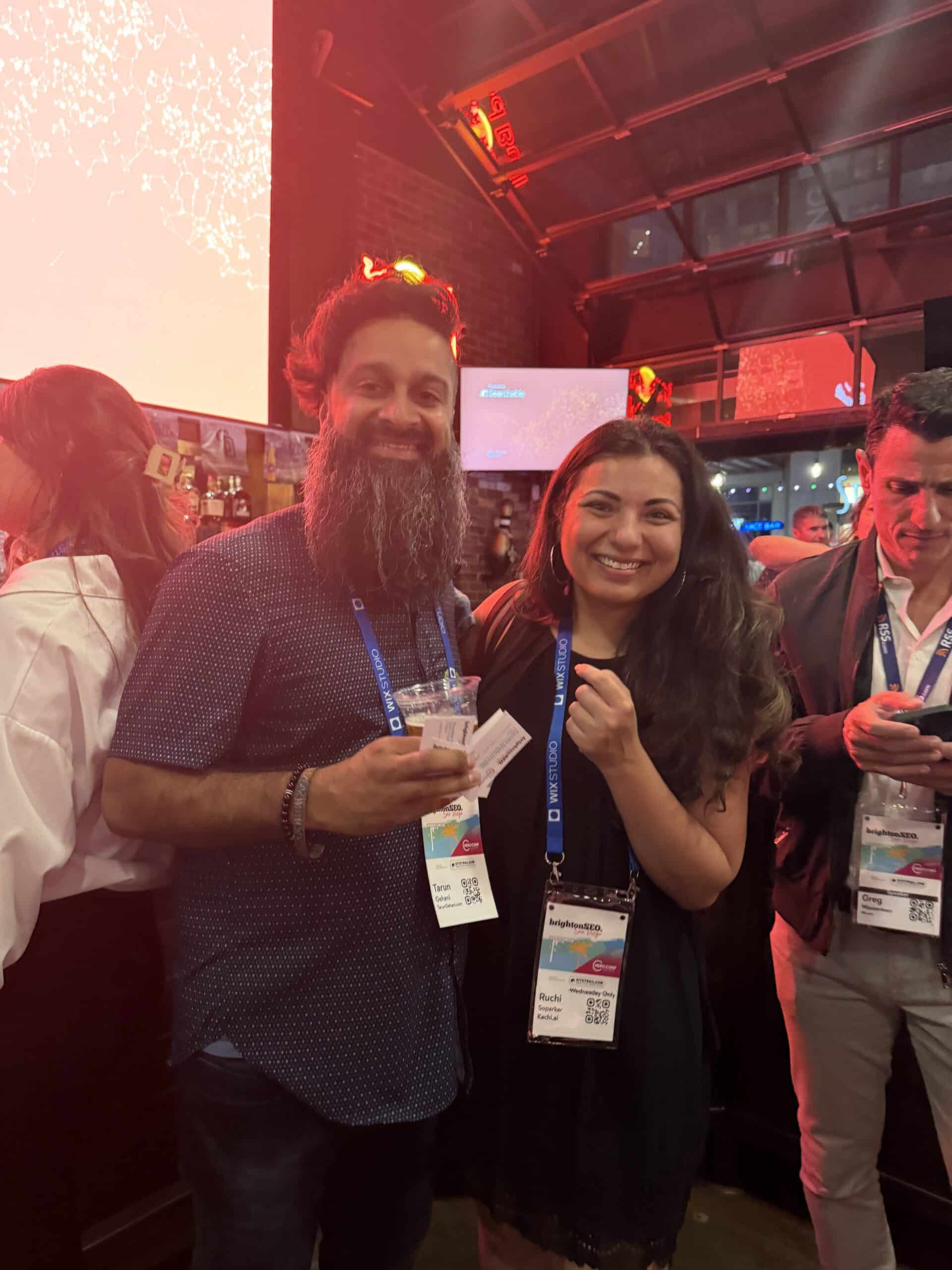
I also met Nicole Franco, Head of Digital PR and AI Innovation at Fractl, and Kelsey Libert, Fractl co-founder and SVP of Marketing. We talked earned media in the age of AI and got into why people jump from agency to agency and what small businesses actually need.
I compared podcast notes with Greg Wasserman of RSS.com, whose actual title is Head of Relationships. His talk earlier that day argued that a podcast is less a content channel and more a machine for building relationships, one guest at a time.
The reason I’m telling you about drink tickets and a car ride in an article about AI search: relationships are how you end up in other people’s stories. What other people say about you now matters more than what you say about yourself, in person and in AI search.
Day 2
Slower Morning, Sharper Questions
Day 2 started slower for me. Late night at the bar, early morning at the venue. Worth it.
The morning sessions were all about measurement, and the data didn’t support the “SEO is dead, and AI killed search” story.
Theme 3
AI Hasn't Replaced Search, It Moved into the Middle of the Journey
Skyler Rudolfsky of Semrush opened with journey data from 20 billion monthly click events: 80% of conversion journeys for significant purchases include an AI touchpoint, and 90% of those also include a traditional search engine. AI and search are not substitutes. They are teammates in the same messy journey.
Baruch Toledano of Similarweb brought the numbers that should end the funeral: 95% of ChatGPT users are also Google users, unchanged since 2024. Nobody migrated. Everybody added a tool. His downstream data showed AI recommendations driving 2 to 4 times more visits to mentioned brands, with search capturing most of that credit in analytics. The lift is real. The attribution is broken. His conversion data made the case even more plainly: AI-only sessions convert the worst, sessions that use both AI and search convert the best, and AI-only is about 1.3% of transactional journeys anyway. His line for the analytics problem: AI-influenced traffic is sitting in your branded search line, wearing a disguise.
Jill Maldonado of Victorious translated all of it into the language leadership speaks: track a small set of revenue topics, read share of voice as a trend line, and pair leading indicators like citations with lagging ones like branded search. Her stat of the day: AI-driven conversions run 3 times higher than other channels, because the visitor arrives pre-convinced.
Jill’s advice to read share of voice as a trend line matters more than it sounds, because of how the AI visibility tools in the exhibitor hall actually work. If you are shopping for one, keep this in mind before signing a contract:
- This industry is moving fast, but AI visibility measurement is still early, and every tool shares the same blind spot: none of them can see the prompts real people type into ChatGPT or Claude.
- Google doesn’t fill the gap either. Search Console does not tell you which of your impressions came from AI Overviews or AI Mode. So the tools run their own sample prompts and report what comes back.
- Real users do not behave like sample prompts. The engines fan one question out into many searches behind the scenes, and every answer is shaped by the conversation that came before it.
Damian Rollison of SOCi grounded the trust side in local search: AI usage for local discovery jumped from 9% to 52% in a year. But 67% have gotten wrong information about a local business from AI at least once, which is why most consumers still verify AI answers somewhere else before acting. His dataset deserves its own writeup, and it will get one in my talk-by-talk series.
Garrett French of Citation Labs reframed the entire optimization question: stop chasing keywords and start mapping the decision points of a buying committee, because AI engines use query fan out to break one purchase question out into hundreds of pages read on the buyer’s behalf.
Then there is the randomness. Rand Fishkin of SparkToro tested it with 600 volunteers running the same prompts through ChatGPT, Claude, and Google’s AI nearly 3,000 times. The chance of getting the same list of brands twice in 100 runs was under 1 in 100. The same list in the same order was closer to 1 in 1,000.
His conclusion is worth repeating to anyone shopping for a tool: your “ranking position” in an AI answer is meaningless, but how often your brand appears when a prompt is run dozens of times is a reasonable signal. One run is an anecdote. Sixty to a hundred runs gives you a probability, and even then you are averaging, not observing.
That doesn’t make these tools useless. It makes their numbers directional, which is why I re-run the same prompt library over time and read the trend line, not a single snapshot. Any tool promising to tell you where you “rank” in ChatGPT is overselling.
Actionable Takeaway: Report AI and search together, never separately. Measuring them as rival channels will mislead you in both directions. Measure brand lift on branded search and direct traffic, not AI referral clicks alone. And put “how did you hear about us?” on every intake form; it will catch attribution your analytics cannot.
The turn: where a 17-year SEO actually learned something new
Most of what I heard at the conference was reinforcement. Things I already knew and already practice, confirmed by experts I respect. That’s not a complaint. Hearing the sharpest people in your field independently validate your approach is worth the flight by itself.
But three sessions genuinely taught me things I did not know.
- Sam Torres on JavaScript SEO
- Fili Wiese on HTTP responses and some advanced Googlebot behavior
- Zach Chahalis on log file forensics
Notice anything? They were the three most technical talks in the building.
Fili, an ex-Google engineer now at Search Brothers, delivered detail after detail that will change how I audit: keep time to first byte under 100 milliseconds. A robots.txt file returning a 500 error gets your whole site treated as disallowed and de-indexed. Cloudflare’s Speed Brain feature, on by default, can serve broken JavaScript during rendering. And after the May 2024 update, his standard for every indexed page: it needs to be a masterpiece.
“Eligibility is the new ranking.”
Zach Chahalis, iPullRank. A slow page is not ranked lower in AI search. It is not ranked at all.
Zach Chahalis, VP of Relevance Engineering and Analytics at iPullRank, gave the talk I will be quoting for months. His deck also cited Profound’s analysis of roughly 700,000 pages: pages that time out too often earn 18 times fewer AI citations, and pages failing more than 75% of the time earned zero. His full deck is already on Speaker Deck.
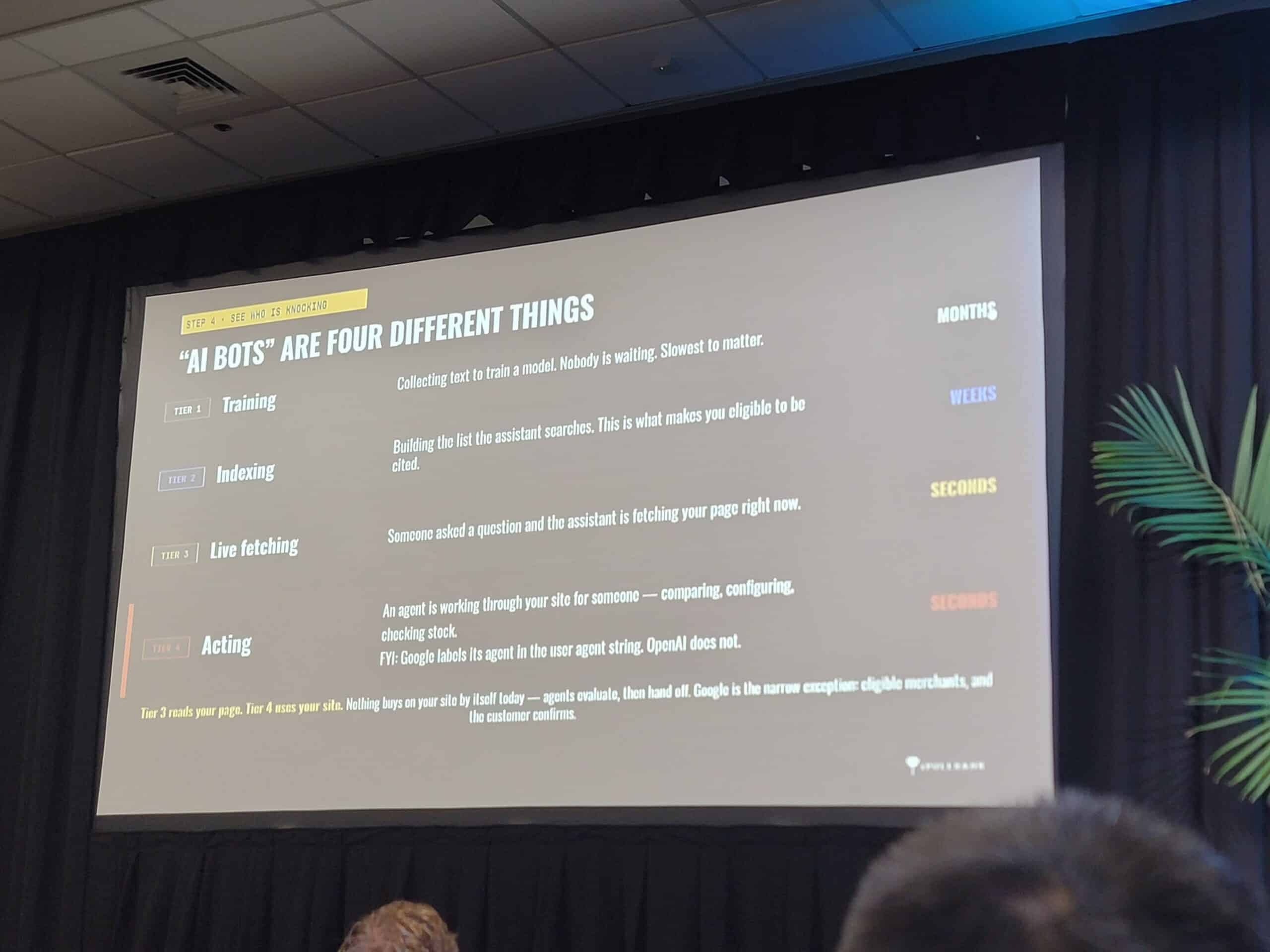
Zach Chahalis of iPullRank’s slide showing the four tiers of AI bots: training, indexing, live fetching, and acting.
So, is technical SEO dead?
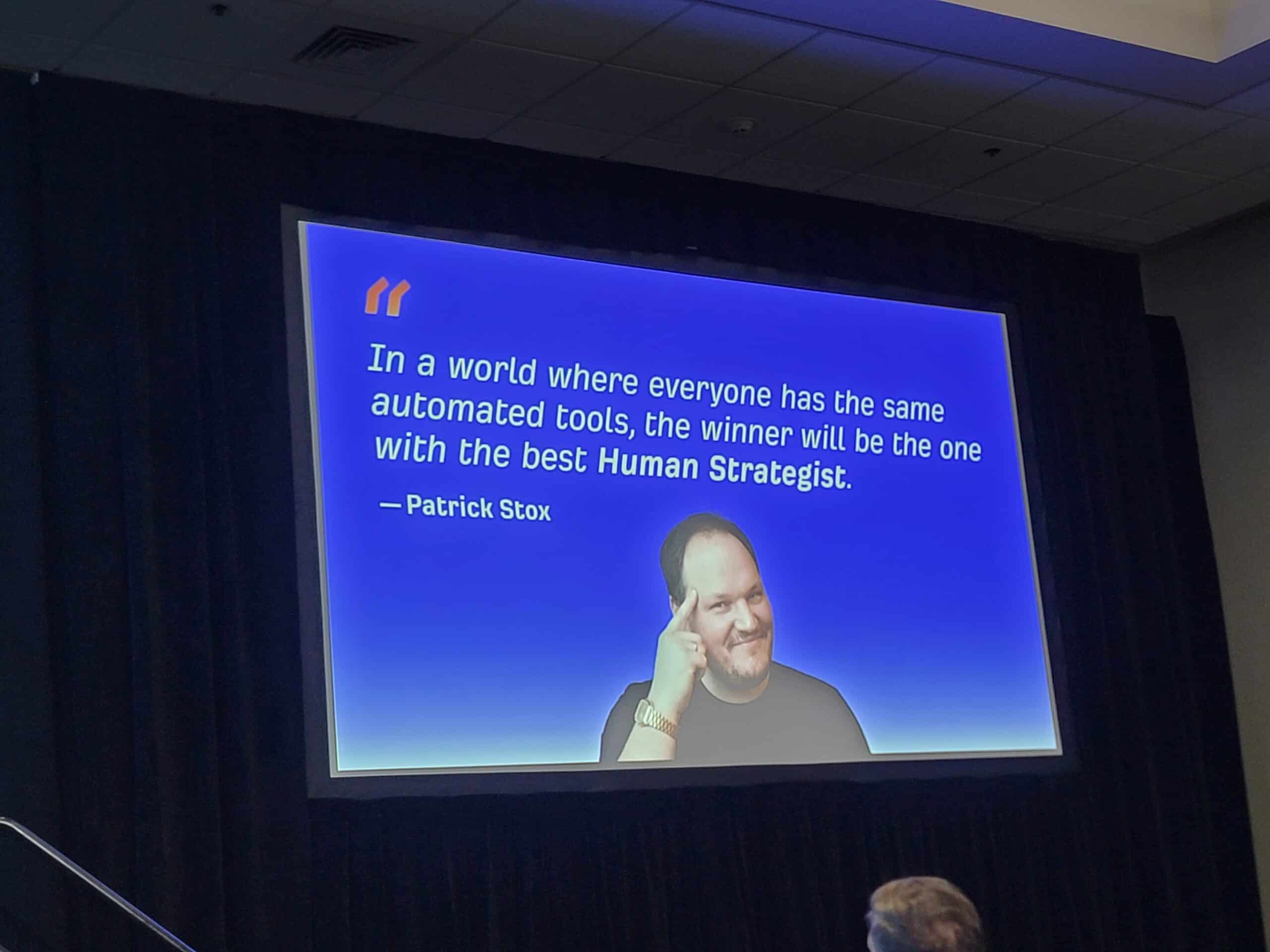
Patrick Stox’s actual argument, asterisk included, is that the checklist era is over. The rote audits, the copy-paste fix lists, the reports nobody implements: that layer is being automated out of existence, and good riddance. I agree with him there. Ray Grieselhuber made the same point one track over: “X is dead” is a phrase taught to startup founders to help with fundraising. Worth remembering every time it shows up on a slide.
Grace Frohlich of Amsive made the companion case, citing Cyrus Shepard’s finding that roughly 90% of existing SEO work applies directly to AI search, and showing how to weight audits by revenue before you ever run a crawl.
But the layer underneath the checklist, the infrastructure layer where rendering, response codes, and log files live, is not dead. It is where AI visibility is decided.
The conference where the SEOs were building
One more thing happened in San Diego that I have never seen at an SEO conference before. It grew an unofficial builders track.
Noah Learner of Sterling Sky and The SEO Community taught Claude Code workflows the way you would teach a junior engineer: hooks over rules, context management, and a $1,700 database query mistake that he immediately turned into a public cost-guard hook so nobody repeats it.
John Caiozzo of Caiozzo Consulting showed a technical audit compressed from 4 hours to under 30 minutes with Claude Code, then open-sourced the whole thing. You can run it on a store right now or read the code on GitHub.
Ray Grieselhuber, CEO of DemandSphere, drew the line that organizes all of it: vibe coding is for prototypes, AI-driven engineering is for products, and the difference is deployment, operations, and tests.
“One SEO who can build is worth three who can only recommend.”
Noah Learner, Sterling Sky
Itamar Blauer of WhitePress fit here too, turning crawlers like Screaming Frog and Sitebulb into automated systems through MCP. So did Martha van Berkel of Schema App, who closed Day 1 by mapping how schema markup and knowledge graphs become the doorways agents use to act on your site. Her team’s thinking is in their agentic web ebook.
I sat in that room doing the math on my own practice. I’ve been building internal tools and skills for my SEO & AI consulting work all year. Watching three speakers teach a room of SEOs to do the same confirmed the direction: the consultants who thrive next are the ones who can ship.
Rapid round: the other talks I sat in
The talks above got the deep treatment. These earned their seat too.
- Jen Cornwell, Tinuiti: your 2026 SEO strategy is a cross-functional operating system, not a channel plan, because search is a behavior that shows up everywhere your customers do. Her most surprising data point: AI citations favor micro-influencers with clear, specific content, like a podiatrist with 7,000 followers, over big creators. And her buy-in tip is straight behavioral economics: loss aversion is twice as motivating as gain, so frame declining rankings as the cost of doing nothing.
- Ruth Burr Reedy, Microsoft: getting buy-in is the start, not the finish, and it has to be maintained through every reorg and priority shift. Frame every ask in the recipient’s metrics, because engineering cares about uptime, not your leads, and swap vague requests like “improve content quality” for “rewrite these 40 blog posts.” Then report progress on the inputs, like “56% through the refresh,” right alongside the outcomes, so stakeholders can see the machine working before the traffic moves.
- John Shehata, NewzDash: across his dataset of 55 million articles from 400+ publishers, Google Discover now drives about 75% of publishers’ Google mobile traffic versus 23% from Search, up from roughly two-thirds when NewzDash last published the numbers. He also put Discover’s click-through rate at roughly 6x Search’s. Front-load headlines with named entities, and note that first-person headlines doubled CTR after Google’s Discover update. If you publish content in any volume and are not thinking about Discover, you are optimizing the smaller pipe.
- Chima Mmeje, Moz: enough with the “what is” and “how to” content. Her test for every piece: can the reader act without coming back to ask a question? Her example article packed in templates, scripts, two walkthrough videos, and 22 screenshots, and that kind of definitive resource is how one Moz article earned 2,800+ inbound links. One hard rule from her workflow: never use an LLM for keyword research without a real data source behind it, because LLMs have no keyword data.
- Ken “Magma” Marshall, Meet Sona: in five years your verbal identity, the way your brand actually sounds, is your competitive moat against an ocean of same-sounding AI content. His warning: AI will not replace you, it will turn you into unseasoned content. He calls it oatmealification. He backed it with receipts: by his account, roughly $120K in business over two years from a client who chose him over a big agency for, in their words, energy and vibes. His method is refreshingly unmagical: mine your sales transcripts and support logs for the moments a deal turned, and resist consensus, because a camel is just a horse designed by committee.
- Greg Wasserman, RSS.com: every business needs a podcast, not for downloads, which he calls vanity metrics, but because 50 guests over 50 weeks means 50 relationships, and a handful of those convert or refer more business than most marketing spend. The part most hosts miss: stay connected after the episode, including quarterly calls introducing past guests to each other, so you become the connector. And never pitch-slap a guest after recording. He lives this. Ask me how I know.
- Ethan Smith, Graphite: ChatGPT Ads launched in February and are early and messy, but his ~$13K test produced 13 demo requests at a CPC roughly 6 times cheaper than paid search. The channel behaves nothing like Google Ads: conversations average 17 turns with ads matched to the conversation throughout, targeting is written as prose rather than keyword lists, and your creative itself acts as a targeting layer. His advice is to test one topic, one campaign, one landing page at a time and stay hands-on.
And a tip of the hat to the speakers whose sessions I could not make. That included skipping the freelancers roundtable, which hurt, but 29 talks does not leave much slack in a schedule.
What I would tell a client on Monday
If we sat down Monday morning (maybe your board just asked what the AI search plan is, or your impressions keep climbing while clicks fall and nobody can explain why), here is the short version.
First, we find out what AI bots see when they visit your site. That means server logs and a rendered-versus-raw HTML check, not another rank report. Second, your citation footprint lives mostly on other people’s websites, so earned media moves from the brand budget to the visibility budget. Third, we measure search and AI together, because your buyers use both inside the same journey and the attribution line between them is broken.
None of this replaces the fundamentals. It reorders them. And if your next step is explaining it to leadership, the three findings above are the three slides.
This is the thinking behind my Visibility Audit, and it is where I would start.
What I’m doing next
Conference recaps are cheap. Changed behavior is the receipt. Here is mine.
- Requesting server logs for every active engagement. ZZach’s must-have fields: URL, timestamp, user agent, response code, bytes sent, and response time. Sample first, bulk later.
- Adding a rendered-DOM versus raw-HTML comparison to my audit process for every client, weighted by the pages that drive revenue, per Grace’s method.
- Continuing to build.
I am also turning every one of the 29 sessions into its own article; one per talk, with the slides the speakers have shared and the depth a recap can’t do justice. They’ll publish here over the coming weeks, and my newsletter is where each one lands first.
Two days. Twenty-nine talks. One otter. See you at the next one.
